
Thank you, Rachel
What Greatly Disappointed: a memoir of inherited faith owes to Rachel Held Evans

The me you read about in the first half of my memoir, Greatly Disappointed, only read Adventist writers.
That’s not an accident. It’s how the system was designed. When your tradition believes it holds the most complete truth available to humanity, outside voices become dangerous. For every good point that could be made, error could ride along in its wake. Every perspective that doesn’t confirm what you already know is a threat to the certainty the whole structure depends on.
I stayed inside as long as I could. But a system that claims to hold all the answers can only do so by invalidating the questions its not equipped to answer. Those were the kinds of questions I had.
One of the first outside voices I allowed in was Rachel Held Evans.
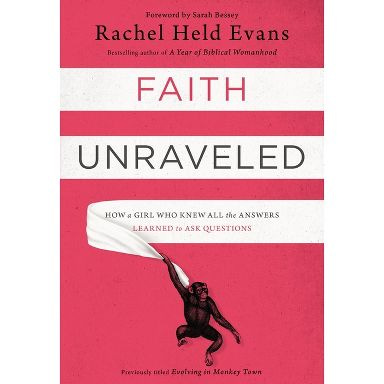
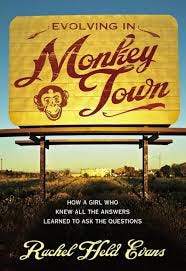
Faith Unraveled (or Evolving in Monkey Town depending on the edition) came first and it named something I had been suffocating under without knowing anyone else could see it.
Most people who wrestle with Christian exclusivity are asking what happens to people who never heard the gospel: the child born into Islam across the world, the tribe untouched by modern civilization.
I had already moved past that question. I was asking what happens to the people who heard it and got it wrong. Which, according to what I’d inherited, was almost everyone.
Adventism had already drawn the circle tighter than most. Other Christians weren’t necessarily lost, but they would be if they stayed outside our truths The Sabbath. The investigative judgment. The final generation theology. Each requirement narrowed the circle further until the math became genuinely unbearable.
Then I read this:
“If salvation is available only to Christians, then the gospel isn’t good news at all. For most of the human race, it is terrible news.”
Evans was naming the mild version of my unbearable tension.
It really put things into perspective. If she was as worried as I was, when my system was vastly more restrictive than what she was deconstructing, how could anyone see my gospel as good news.
That was the permission. Not to abandon anything. Just to say out loud what I had been carrying alone for years: the math didn’t add up. A God who created billions of people only to lose almost all of them to fire wasn’t a God I could keep calling “Love.”
Faith Unraveled didn’t hand me new theology.
It handed me company. Someone else was struggling with it too.
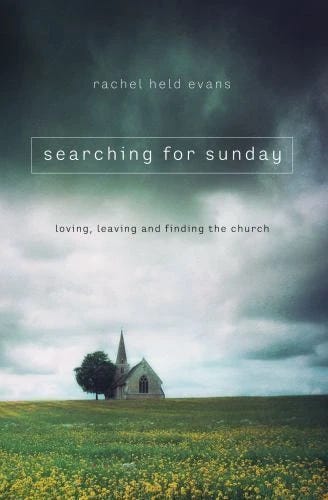
Searching for Sunday found me still holding on.
The walls had falling. The certainty was leaving, but the perfectionism was still running as programmed. The investigative judgment doesn’t just disappear because you stop believing in it intellectually. It lives in your nervous system. It manifests in a constant internal audit, and the inability to feel like enough even after you’ve stopped believing in the system that told you that you weren’t.
I was somewhere between the rubble of what I’d left and the beginning of something I couldn’t name yet. Still measuring. Still auditing. Still waiting for the verdict.
Then Evans wrote this:
“The great struggle of the Christian life is to take God’s name for us, to believe we are beloved and to believe that is enough.”
For most people that’s comfort. For someone raised in a tradition built on perfect obedience and an ongoing celestial investigation of your every deed and thought, that line is a direct assault on the operating system.
Beloved? And that is enough?
Not beloved if you keep the Sabbath correctly. Not beloved pending the outcome of the investigative judgment. Not beloved once you’ve achieved the character perfection required of the final generation. Just beloved. Already. As you are. Without the audit.
I didn’t receive that easily. I’m not sure I’ve received it completely even now. You don’t move from irretrievably broken to loved in one move.
But Evans said it plainly enough and often enough that it started to loosen something that years of theological argument never could.
She gave me a “what if?” I desperately needed to survive.
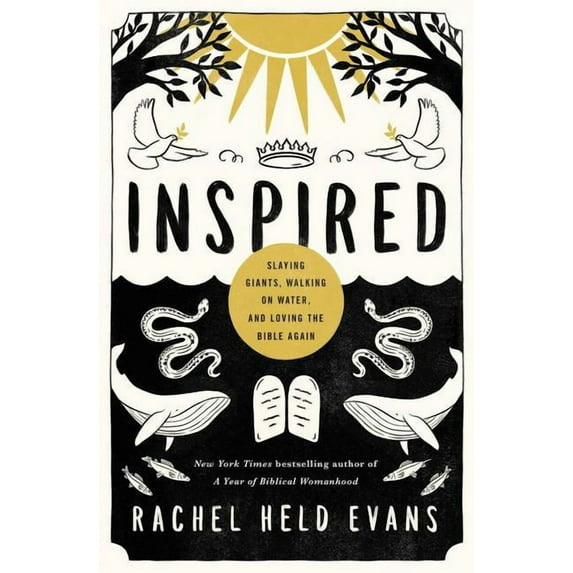
Inspired found me on the other side of the demolition. By the time I got there the certainty was gone. The literal foundations had been examined and released. The load-bearing wall had come down. What I needed wasn’t more permission or more naming. I needed a way to build something with what remained.
Evans handed me midrash. Not the tradition, the practice.
Many had described it as a sort of delighted reverence for the text unencumbered by the expectation that it must behave itself to be true. A posture toward scripture that didn’t require defending it or discarding it. It asks you to engage it with curiosity, without demanding that it resolve into certainty before it could mean something.
But in Inspired, she didn’t just talk about it, she participated:
She told a story about the day a kid growing up in babylonian times who has learned their origin stories and then hears the Genesis story for the first time. A story of Hagar naming God, stories about fish. Midrash was akin to theological fan fiction in that it takes scripture and creates expansive worlds for the reader to sit in.
I actually wasn’t a stranger to this concept. My church’s prophet did the same thing. Patriarchs and Prophets and Desire of Ages are each fan fictions of the two testaments in the bible. Except we were taught they were inspired the same way.
We couldn’t sit in Ellen’s midrash, we had to accept it as divine. These were edicts. Precedents. Fixed standard delivered from outside time against which every thought and deed would eventually be measured. Rachel showed me that you could approach the same text with delight; that you could sit with its tensions and contradictions and ancient humanity not as problems to solve but as invitations to wrestle. That was genuinely new.
And then she wrote this about a story I’d been taught to defend as literal history or discard entirely:
“This single event, whether historical or legendary or a bit of both, has shaped the faith of millions of people, inspiring artists and activists and world leaders for centuries. Never should it be discounted as just a story.”
That sentence gave me not just permission to keep loving a book I could no longer hold the way I was taught, but explained to me why I wanted to. Which is its own quiet grief that almost nobody talks about in deconstruction spaces: mourning of a relationship with a text you still love but can no longer defend the same way. Evans didn’t make me choose between the grief and the love. She just showed me there was a third option.
Its importance transcended the category of fact or fiction because its ingrained in all of us. We understand so much about ourselves in how we handle it.
You don’t stop thinking Moby Dick was well written when you learn it’s not really about catching a fish. You appreciate it more.
I took that option into my own book. My chapter on Eden isn’t a critique of Genesis. It’s a conversation with it. A reflection on the garden not asking what it demands of me but what it might be trying to say. What it was always trying to say before we buried it under mountains of assumption trying to make it behave itself.
I dared to take that posture because of Rachel.
There’s a particular kind of writer who makes you feel less alone in the middle of something terrifying. Who names the thing you’ve been carrying with enough precision that you feel seen rather than exposed. Who models a faith that has survived contact with honest questions and come out not smaller but more spacious.
Rachel Held Evans was that writer. And she did it while the system she was challenging was still pushing back hard.
We lost Rachel in 2019. I think about how many people are still finding her books at the exact moment they need them. How many people are in their own dark nights right now, reading Faith Unraveled for the first time, feeling the mild version of their unbearable tension finally named by someone who could hold it without flinching.
I’d give you an order to read her work, but it really doesn’t matter. She was and will always be the GOAT to me.
She didn’t just help me leave something behind. She handed me a way back in.