
Rhythm, or Precision
If the doubt is reasonable, is the conviction just?

Let’s talk about the Sabbath:
It always comes up in conversation within the Adventist deconstruction community: someone talking about why they left, and no matter the doctrinal dissonance, abuse, or doubt, and someone else interjects,
“Well, the Bible says the seventh day is holy.”
It’s dropped into the discussion like a trump card. It doesn’t matter what suit started the hand, Adventism holds an impenetrable fact of dogmatic superiority.
In truth, the play is a tell that betrays fear more than belief.
It says, “Regardless of what errors, problems, and inconsistencies; regardless of the overreliance on Ellen White and struggles with legalism and perfectionism, we can’t escape the reality of what God will do to people who do not keep Sabbath on Saturdays.”
It is a very effective indoctrination tool. It’s how Adventists try to win over other Christians. For non-believers, we tell you about Jesus, but anybody can do that. It’s other Christians we want. “Come out of her” is not a message to the world, but a warning to non-sabbath keeping Christian denominations. To get them, we do what it takes to convince them that their church, their worship, their obedience is insufficient. The first step to redemption is learning “the True Sabbath.”
Adventism is partially based on the idea that soon, keeping the ‘True Sabbath’ will be elevated above the rest of the Decalogue, and some might argue even faith in Jesus itself, to become God’s ultimate test of obedience. Going to a Christian church on Sunday will become the Mark of the Beast, and everyone who continues that cycle of worship to the Christian God will condemn themselves to hell. Only those who continued to keep the True Sabbath, under threat of prosecution and death, will be saved in the Second Coming of Jesus.
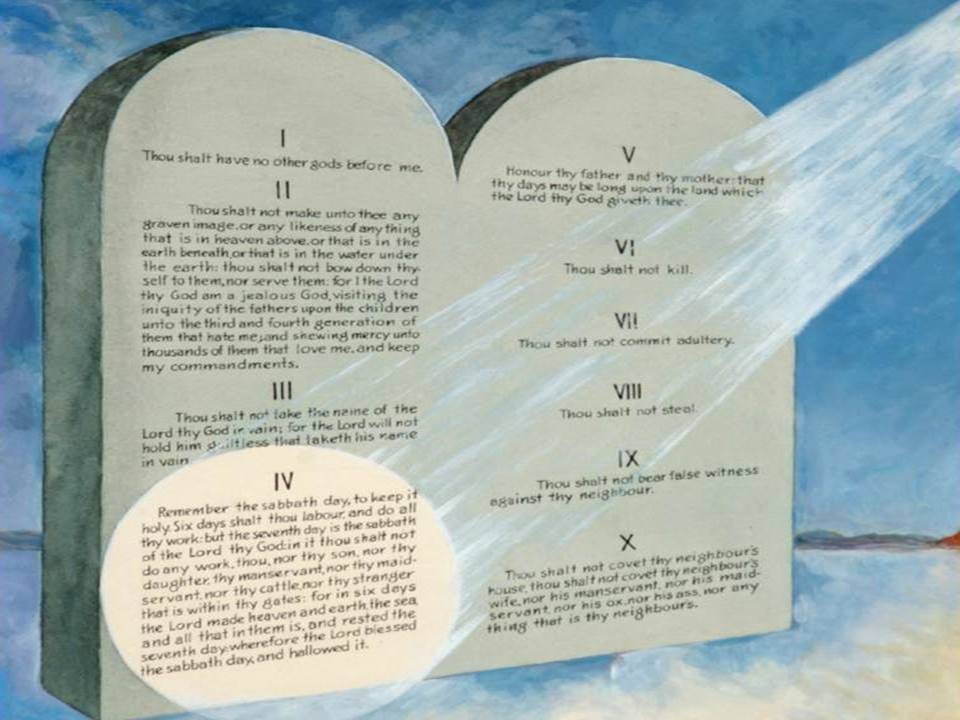
This view of the ultimate importance of Sabbatarianism is based on these two pillars:
There is a True Sabbath–the specific day on which true worship is required, and the only day that worship is truly accepted.
It is the most important thing to God in our current era of spiritual dispensation.
I know how important this is to Adventists, so I want to address this as compassionately as possible; not as a skeptic, but using Adventism’s own interpretive rules.
The Bible clearly says,
“Remember the Sabbath day to keep it holy. Six days shalt thou labor and do all thy work, but the seventh day is the Sabbath.”
It couldn’t be clearer.
Keep the True Sabbath or end up in hell.
The claim depends on a level of certainty that the text can’t support. It requires a single literal starting point for time and Sabbaths; an unbroken weekly cycle that began at that starting point; that we know when that point in time was, and that God devalues faith in favor of historical precision.
Where did the practice of a weekly Sabbath begin?
Adventism’s ultimate claim about the Sabbath’s integral role in the beginning and end of the divine plan requires the practice of a weekly Sabbath to predate sin; predate Israel; and have never been altered or adjusted by any culture. Not even by a single day. God instituted a universal, weekly Sabbath at the climax of a literal six-day creation event, in Adventist reckoning, around 6,000-10,000 years ago, and it correlates to the Saturday on our modern Julian calendar.
Setting aside the scientific difficulties of such a literal Genesis chronology (of which there are many),1 the Book says God created for six days and on the seventh He rested and made that day holy. What the Bible does not claim is that come Sunday or Monday, God grabbed His lunchpail and got back to the grind. God was done. That is the first hurdle: not determining what day was ‘the seventh day’, but what was the day after. Was it ‘the first day’ again, or was it day eight?
Genesis 1 does not clearly initiate a perpetual cycle in this opening story. It feels like it does because we have lived in the rhythm of a seven-day week for generations upon generations, but you can’t imply a universal obligation, final test, and the seal of God.2 You have to be explicit. Genesis is not.3 The opening frames of our biblical narrative do not speak in weekly cycles. They measure time in years and the births of sons.
Gen 5:3 When Adam had lived one hundred thirty years, he became the father of a son in his likeness, according to his image, and named him Seth. 4 The days of Adam after he became the father of Seth were eight hundred years, and he had other sons and daughters. 5 Thus, all the days that Adam lived were nine hundred thirty years, and he died.
Sabbaths disappear immediately. Actually, ‘Sabbaths’ plural isn’t accurate. There was just the one, and God is the only one who rested. There were only two humans on Earth, and the Bible doesn’t claim either of them observed it. The covenant God makes with the first humans is not that they rest on the seventh day. He gives them dominion and tells them to be fruitful and multiply (keep that in mind for a second).
The Elohim do not mention the Sabbath to Adam when they give him the rules of the garden.
It’s not why Cain and Abel were bringing sacrifices.
It’s not something Enoch is claimed to have observed on his walk with God.
And neglecting to keep it isn’t something mentioned in the moral decay leading to the flood.
Speaking of the flood, it came in the six hundredth year of Noah’s life, in the second month, on the seventeenth day of the month - not three days after the second Sabbath. It rained for forty days; not nearly 6 Sabbaths. Inside the dark ark, in a perpetual storm, how did Noah keep track of time to know when the sun set? The Bible is silent.
The flood was a de-creation/re-creation event. It would make sense for God to re-establish the Sabbath with the new covenant God makes with Noah. Instead, the covenant God makes is dominion over the land and a command to “be fruitful and multiply” again.
In Genesis 17, Father Abraham’s covenant with God is circumcision and the birth of a nation (multiply). His faith was counted to him as righteousness because he agreed to kill his son of promise, not keep ‘the seventh-day’ Sabbath.
Why?
These stories are older than Israel’s adoption of a seven-day week.
Calendric Chaos:
This may come as a shock, but a seven-day week is not immediately intuitive. Historically, it seems most cultures measured the passing of time by the movement of the sun and the moon (they were placed in the sky for times and seasons after all). Our 12 months chart the sun’s motion through 12 constellations. Each month charts the moon’s cycles across 30 days.
These cultures cultivated festivals and religious ceremonies around these cycles. Full moons were either holy or taboo depending on which side of the border you came from. It is easiest to divide its cycle into four phases of seven days each.
With 12 months of 30 days, the eras in which the stories of the Bible were written had years that were 360 days long. But these are approximations. 12 lunar cycles take only 354 days, while a full solar year takes 365.24 days.
Have you wondered how ancient cultures resolved these issues without eventually throwing the seasons off their rhythm? Some used something called Epagomenal days.4 Days that existed outside of the calendar. Egypt, one empire under which Israel lived, according to the Bible, for 400 years, added 5 extra days at the end of their calendar year. These days were not part of any month. It wasn’t December 36 or January negative 5th. If a culture had ‘weeks’, these epagomenal days were often not a part of them.
Babylon, instead of using a fixed number of additional days each year, used a leap month. The gap between the lunar cycles and solar cycles grew to a point where a 13 month was necessary to continue to predict the seasons and the harvests.
Interestingly, we have hard evidence that Babylon began culturally developing a 7-day week before evidence of Israel doing so. And like Egypt, Babylon was another empire Israel lived under. In addition to epagomenal days as Egypt used them, Babylon’s calendar was based on the lunar cycle, and they needed to adjust the calendar according to the moon, not at the end of the year.
The important days of the month were the 7th, 14th, 21st, and 28th. After that were ‘tail days’ until the lunar cycle ended. The next month waited for the moon. Instead of having set months that end with 30 or 31 days (and February with 28) the ‘month’ ended after 28 days. Then the tail days lasted until the new moon. Those days were also outside of time. They were festival days. Shopping days. Whatever. But they weren’t numbered. The “first” day was a reference to the moon, not a reference to the day before.
The week wasn’t autonomous yet. It wasn’t regularly repeating; it was embedded in the moon’s rhythm. Time wasn’t yet independent of the cosmos in ancient Babylon, where Israel was exiled. History and scholarship show it was only after the Exile that Israel came to adopt a fixed seven-day week.
The concept of Sabbaths seems to have originally been tied to the new moon (monthly) as well. The prophets that predate the exile, like Amos and Hosea, always place the Sabbath alongside a new moon.
“When will the new moon be over, that we may sell grain? And the Sabbath, that we may trade wheat…?” - Amos 8:5
“I will put an end to all her mirth, her feasts, her new moons, her Sabbaths, and all her appointed festivals.” - Hosea 2:11
“Bring no more vain offerings; incense is an abomination to me. New moon and Sabbath, and the calling of convocations; I cannot endure iniquity and solemn assembly.” Isaiah 1:13-14
“From new moon to new moon, and from Sabbath to Sabbath, all flesh shall come to worship before me, says the LORD.” Isaiah 66:23.
These authors are using poetic parallelism to structurally pair the new moon with the sabbath indicating their cycles depend on each other. This means that even if these Sabbaths were on the 7th day, their interdependence with the moon could suggest “Sabbath” was not yet a weekly institution. Sabbath was potentially literally ‘the seventh day’ (whenever that may fall) not ‘every seven days.’ Either way, every time a month ended with Epagomenal days, the ‘7th day’, however many of them there were in a given month, shifted from the day they would have been the month before.
Is there any reason for the Adventist to consider the effect of outsider practices on Israel’s culture? Absolutely. The first Testament is full of instances where God corrected and punished Israel for practices it borrowed from its neighbors. Ellen White frequently acknowledges these effects as well.5 She claimed Israel’s religious life was shaped by its surrounding cultures, yet still infers a continued unbroken weekly Sabbath providing no textual backing for it. It is simply assumed because the doctrinal weight Adventism places on the Sabbath as its defining marker requires it. The first Sabbath was on a Saturday. But we do not know when Creation was. Not what month, or season or time of year. There is no way to know when that ‘First day’ was, and by correlation the seventh.
Two Sabbaths?
The first narrative enforcement of a recurring weekly Sabbath that emerges from the Bible’s chronological story is not at Creation nor at Mt. Sinai with the Ten Commandments, but in the story of the manna. We can actually determine what day of a Jewish calendar that first fell on, and if the specificity of time matters to God, then we have to take seriously anytime God starts a clock.
In Exodus 12:2, we find Israel just before it is rescued from Egyptian captivity. God gives Moses and Aaron instructions for the first Passover (the blood on the doorposts thing) and tells them,
“This month shall be for you the beginning of months; it shall be the first month of the year for you, and you shall observe it when the barley is in the ear (aviv).”
The New Year begins when the barley is ready for harvest. In practice, this means the first day of the first month of the year is the day after the first new moon once the barley is ripe enough for Passover offerings. That day is Nisan 1.
Nisan 1 is not a fixed day on the Julian calendar, and the day before Nisan 1 is either Adar 29 or Adar 30. It shifts. That shift eventually builds up to span an entire month, so every 2-3 years there is an Adar II. A full extra month must be added to keep Passover in the spring as God required (recall Babylon’s leap month and the necessity of days outside of time).
Nisan 1 in Exodus 12:2 was God’s opportunity to start Israel on a “first day.” According to Exodus 12:6, liberation came on the 15th day of the first month. Four chapters later, on the fifteenth day of the second month (one month after the Exodus) the people tell Moses they didn’t leave Egyptian bondage just to starve to death.
God tells Moses that He will rain down bread from heaven each morning. Just enough to eat for the day, and any extra would spoil. On the 6th day, He’d send twice as much so they could take the next day off. The story does not claim that the manna would fall every day except the Sabbath of Creation, but that it would fall for 6 days. The day it did not fall was a Sabbath.
If Nisan 1 was the first day of the first month of the first year of God’s emancipated nation of Israel, the 15th day of the second month was 15 Iyar, the 45th day. The next day was the first day of manna, 16 Iyar, making the first ‘manna sabbath’ 22 Iyar; the 52nd day of the year.
*Seventh. Fourteenth. Twenty-first. Twenty-eighth. Thirty-fifth. Forty-second. Forty-ninth. Fifty-sixth.*
If the first day of the first month of the first year was the equivalent of a Sunday, day 52 would have been a Tuesday. Why does this matter? If day 52 was anything other than what we now call Saturday, for forty years, the Israelites would have had two weekly sabbaths that contradicted each other. They’d have Saturdays where they would be required to collect manna in violation of Sabbath rest or starve, and they’d have another day that week, in our hypothetical case – Tuesdays – where no manna fell leaving them no work to do.
The easiest solution to this problem is to assume that whenever manna didn’t fall and the modern Saturday are the same day. But the direction for their manna sabbath was not that they rested; but that God would have already provided enough manna the day before. It was not a loyalty test. It was a logistical choice. If there were a separate holy loyalty test tied to that same weekly food cycle; a test that would ultimately carry universal consequences, why would God continue to be coy about it?
The other solution, one the consensus of biblical scholarship believes, is that the Creation Sabbath and the Mt. Sinai Sabbath were later additions in the Torah that were codified after the Babylonian exile and the adoption of their seven-day rhythm.
To complicate matters even more, this calendar reset after the Exodus isn’t the only calendar the Bible shows Israel using. A separate Hebrew calendar also exists, where the new year is in the fall instead of the spring. Most Adventists should already know this as the founders’ prophecies of the second coming originally fell from March 1843-March 1844 (Spring new ear — Jesus returns for Passover) and then shifted to October 1844 (Fall new year — Jesus returns for the atonement on Yom Kippur.)
What the Bible does not contain, shape, or form is a calendar that marks time from the Creation week.
Will this be on the exam?
One thing we do now is that the Jewish Sabbath has been on Saturday in an unbroken weekly chain since the post-exilic era. The Saturday Adventists keep as Sabbath has been that Sabbath for a very long time. No doubt about that. As an American, it is ‘our’ seventh day as well. But that is a cultural decision, not a cosmic one. It’s not a universal one.
I’ll never forget sitting in my high school Spanish class and being shown a calendar from Mexico. The weekdays ran from Lunes to Domingo (Monday to Sunday), not Domingo to Sabado (Sunday to Saturday). The ‘7th day’ of the week according to their calendar was Sunday. Weren’t they keeping the Sabbath as their calendar calculated it even if it wasn’t the seventh day according to Julius Caesar’s?
What we cannot know with any certainty whatsoever is what day of our modern week correlates with the seventh day of the Creation story. We can’t know that not a single Epagomenal day slipped in there somewhere for a calendar correction, or waiting for the harvest, that moved one of the ‘first days,’ which by necessity moved the seventh day.
We just can’t know. We can choose to believe in the rhythm of rest every seven days. We can learn and grow a lot from such a regular break. It was made for the benefit of humanity, as Jesus said while technically breaking it. But no matter where the source of the concept originates, the day is an adoption of a man-made tradition.
This raises an ethical question: if humans cannot know which day historically aligns with the original Sabbath, how could it ever serve as the test of obedience in the face of another day? Such a standard would be fundamentally unjust. For the Sabbath to be what Adventism claims it is, there has to be an easily determinable First Day, and there isn’t one. Rather, there isn’t just one. Maybe it’s just the ex-defense lawyer in me, but if the doubt is reasonable, a conviction wouldn’t be just.
So that’s the quandary:
“Well, the Bible says the seventh day is holy.”
Yes, it does, but only culture and tradition can tell you what day that is, not God. If that’s true, precision cannot be the final test. If it is the final test, it doesn’t feel very just.
Don’t take this to mean that a Sabbath is of no significance. That is not my point or intention. There is something genuinely beautiful in a regular rhythm of rest. And something beautiful about a people who imagine a God who commands rest instead of endless productivity. A God who models completion and satisfaction instead of constant proving and perpetual labor. A weekly pause says something sacred about limits. There is nothing wrong with an all-powerful being who is humane and empathetic.
In that sense, the Sabbath is generous instead of arbitrary. But gifts change when they become tests.
A rhythm meant to interrupt anxiety can be repurposed to enforce it. What was meant as a gift to soothe the soul becomes the only way that soul, under divine threat, can survive. At that point, the Sabbath is no longer a day but the means to salvation itself. An idol forms. Ironically, turning Sabbath into the final test may “change times and laws” just as thoroughly as moving it to another day.
I said before that Jesus technically broke the Sabbath. That isn’t a fair summary. What He did was refuse to let the gift become an idol. When they challenged Him, He reframed it: The Sabbath was made for man, not man for the Sabbath. He was not pointing out loopholes for the medical field6 and minimalistic food preparation7, but recalibrating the brand.
A God who gives rest does so because people need it, not because He does. A God who tests people on the precision of unknowable calendars is not offering rest but handing them a revolver for Russian roulette. Whenever allegiance to an idea becomes the measure of righteousness, that allegiance becomes fertile ground for idolatry. The Sabbath Test requires a kind of certainty that, reading the text carefully, can’t actually be supported.
It is epistemic overreach for the sake of a remnant identity.
We should not constrain grace, hope, and reconciliation with human calendars. Faithfulness to the spirit of Sabbath is expressed through rest, reflection, loving our neighbor; not Swiss precision and identity markers.
Sabbath shouldn’t be our hammer. It should be a refuge.
If we want to keep it holy, we should start there.
and I mean SOOOO many...
“Now those who submit to, and reverence the institution of the Pope, receive the mark of the beast, but those who throw off the last vestige of Papacy, and reverence God, by keeping his Holy Sabbath, will receive the mark, or seal of the living God” (PT vol. 1 no.8, March, 1850).
God does not eat from each tree in the garden except the one, and hope Adam and Eve noticed. He expressly lays out the rule.
https://www.collinsdictionary.com/us/dictionary/english/epagomenal
“God had delivered them from Egyptian bondage, that they might be free to serve Him. But having been brought into contact with idolatry, and seeing the apparent prosperity of the worshipers of idols, they had become corrupted by their influence, and their religious faith was greatly weakened. By proclaiming His law in awful grandeur, God sought to impress them with a sense of His power and authority, and to awaken in their hearts reverence and fear.” Patriarchs and Prophets page 306-307
Luke 13:15–16, Matthew 12:11–12
Matthew 12:1–2